
 jennie
 Picture this: twelve unique craft beers arrive at your doorstep each month, carefully selected from breweries you’ve never heard of but are about to fall in love with. That’s the promise of beer subscription boxes in 2026, and the industry has evolved far beyond random assortments of mediocre IPAs.
The subscription model has matured into something genuinely valuable for both casual drinkers and serious beer students. You’re no longer gambling on mystery boxes filled with distributor leftovers. Today’s best services curate experiences around specific styles, regional scenes, or brewing techniques. Some focus exclusively on hazy NEIPAs from New England. Others spotlight emerging sour programs from the Midwest. A few have carved out niches around Belgian imports or West Coast throwbacks.
For homebrewers, these boxes offer something particularly useful: a structured tasting education you’d struggle to replicate on your own. Sampling a dozen different takes on Baltic porter or trying six variations of fruited sours gives you reference points that textbooks can’t provide. You taste how different yeast strains express themselves. You notice how grain bills shift flavor profiles. You start to understand why certain breweries command cult followings.
The challenge is choosing wisely. Monthly costs range from thirty dollars for basic national boxes to well over a hundred for premium craft-only services. Some ship from a single warehouse with questionable freshness practices. Others coordinate directly with breweries for beer that left the brite tank days earlier. Quality varies wildly, and the wrong choice means you’re stuck drinking underwhelming beer while watching your money evaporate.
This guide breaks down exactly what separates exceptional subscription services from overpriced marketing schemes, how to evaluate true value beyond per-bottle cost, and which box types align with different drinking goals.
What Makes a Beer Subscription Box Worth Your Money in 2026
The subscription box market has matured considerably since the early days of random beer assortments arriving at your door. In 2026, the boxes worth your money share specific qualities that go far beyond just shipping you a variety pack.
Curation quality sits at the heart of any worthwhile subscription. The best services employ people who actually understand beer, often certified cicerones or experienced brewers, rather than algorithms selecting based solely on availability. You’ll notice the difference immediately: thoughtful selections tell a story, whether that’s exploring a single hop variety across multiple breweries or showcasing how different regions interpret the same style. A box curated by someone with genuine expertise feels like getting recommendations from your most knowledgeable beer friend, not a warehouse fulfillment system.
Brewery partnerships reveal a subscription’s credibility within the industry. Top-tier services maintain direct relationships with breweries, often securing limited releases or collaborative brews you won’t find in retail. When subscription boxes feature interviews with brewmasters, behind-the-scenes brewery stories, or advance access to seasonal releases, you’re seeing evidence of real industry connections. These partnerships benefit everyone: breweries reach engaged audiences, and subscribers discover beers that never hit distribution.
Educational value separates subscriptions designed for enthusiasts from those targeting casual drinkers. For homebrewers, this means detailed tasting notes that break down malt bills, hop schedules, fermentation profiles, and water chemistry considerations. The difference between “citrusy IPA” and “late-addition Citra and Mosaic hops at 175°F create grapefruit and tropical notes without harsh bitterness” is everything when you’re trying to understand how professional brewers achieve specific results. Some subscriptions now include QR codes linking to video content from the actual brewers discussing their process.
Pricing transparency has become non-negotiable. Reputable subscriptions clearly break down what you’re paying for: the retail value of the beers, shipping costs, and any curation fees. If a service hesitates to explain pricing or buries costs in fine print, that’s your signal to look elsewhere. The best value doesn’t always mean the cheapest box, it means fair pricing for quality selections, reliable delivery, and genuine discovery you couldn’t easily replicate on your own. Calculate the per-bottle cost against what you’d pay at your local bottle shop for comparable quality, factoring in the convenience of discovery.

The Different Types of Beer Subscription Boxes (And Who They’re Actually For)
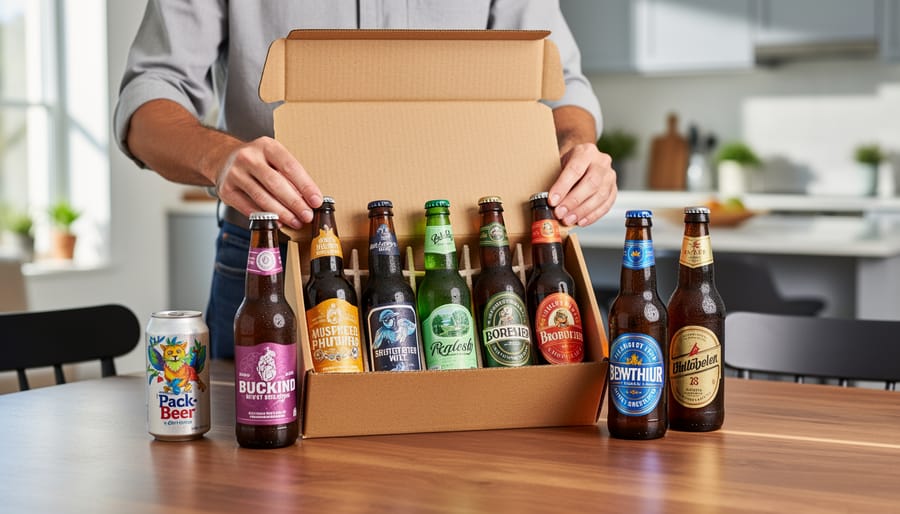
Walking into the subscription box market feels overwhelming when you’re staring down dozens of services claiming they’ll revolutionize your beer drinking. But beneath the marketing noise, most subscriptions fall into five distinct categories, each designed for different needs.
Curated craft selections are the generalists of the subscription world. These boxes pull from multiple breweries across various styles, usually chosen by a beer director or sommelier who’s trying to balance discovery with drinkability. They’re ideal for the beer drinker who wants exposure without commitment to any single style. You’ll get IPAs alongside stouts, lagers next to sours, giving you a broad survey of what’s happening in craft beer right now. The downside? If you already know you hate barrel-aged beers, you’ll still find them in your box.
Rare and limited release subscriptions cater to the collectors and the obsessives. These services chase barrel-aged imperial stouts, experimental collaborations, and the beers that sell out at taprooms within hours. Expect higher price points and shipping weights that make your mail carrier curse your name. They’re perfect for the enthusiast who wants bragging rights and Instagram-worthy bottles, but they’re overkill if you’re just trying to enjoy a good beer after work.
Regional focus boxes let you deep-dive into a specific brewing scene without buying plane tickets. Want to explore Vermont’s hazy IPA culture or California’s mixed fermentation wizards? These subscriptions bring geography to your doorstep. They’re particularly valuable for homebrewers studying how regional water profiles and local ingredients shape beer character. The limitation is obvious: you’re locked into one area’s approach to brewing, which can feel repetitive after a few months.
| Subscription Type | Best For | Typical Price Range | Key Benefits |
|---|---|---|---|
| Curated Craft Selections | Explorers wanting variety | $40-$70/month | Broad style exposure, balanced discovery |
| Rare/Limited Releases | Collectors and enthusiasts | $80-$150/month | Exclusive access, bragging rights |
| Regional Focus | Geography-curious drinkers | $50-$85/month | Deep regional knowledge, terroir education |
| Style-Specific | Fans of particular styles | $45-$75/month | Focused expertise, comparative tasting |
| Homebrewer-Focused | Active brewers | $55-$95/month | Recipe analysis, ingredient discovery |
Style-specific subscriptions solve the “too much variety” problem by focusing exclusively on IPAs, sours, lagers, or whatever style makes your heart race. These work brilliantly for comparative tasting because you’re evaluating how different brewers interpret the same general framework. A box of twelve different hazy IPAs teaches you more about that style than a year of random sampling. The trade-off is narrowness; your palate doesn’t develop range, and you might miss the saison that would’ve changed your life.
Homebrewer-focused boxes are the category most services ignore, which is criminal. These subscriptions either include the commercial beers alongside ingredient samples and recipes, or they skip the finished beer entirely and send you grain, hops, and yeast to brew your own version. Some include detailed brewing notes explaining technique choices and process decisions. They’re transformative for brewers who want to reverse-engineer professional results, but they require you to actually brew, not just drink and nod appreciatively.
The right subscription depends entirely on where you are in your beer journey. New to craft? Start with curated selections. Chasing specific styles? Go narrow. Brewing at home and want to level up? Find a service that treats beer as a learning tool, not just a product.
Colorado’s Subscription Box Scene: Supporting Local While Exploring Beyond
Colorado’s craft beer scene has always punched above its weight, and the subscription box landscape reflects that. Several homegrown services have built their reputations on showcasing what makes Rocky Mountain brewing special while still giving subscribers a taste of innovation happening nationwide.
Mile High Beer Box, launched in 2024, dedicates at least 60 percent of each shipment to Colorado breweries, rotating between Front Range favorites and Western Slope hidden gems you won’t find outside the state. They’ve partnered with over 40 Colorado breweries, ensuring subscribers get first access to limited releases from spots like Cannonball Creek and Copper Kettle. The remaining slots feature beers from Pacific Northwest and Midwest breweries that share Colorado’s experimental spirit.
What sets these local services apart is their direct relationships with brewers. Unlike national boxes that purchase through distributors, Colorado-focused subscriptions often work hand-in-hand with taprooms, securing beers that never make it to retail shelves. This connection matters more than you might think.
Sarah Chen, head brewer at Boulder’s Upstream Brewing, explained how subscription partnerships changed her approach: “Before working with local subscription services, we brewed our experimental batches for the taproom only. Now we allocate 20 to 30 cases for subscribers, which gives us immediate feedback from serious beer drinkers across the state. That input has directly influenced which recipes we scale up for wider distribution. It’s created this feedback loop that makes us better brewers.”
The financial impact extends beyond individual breweries. When subscribers discover a Colorado brewery through a box and then visit the taproom or seek out their beers locally, it creates sustainable revenue streams that help small operations compete with bigger names.
That said, Colorado-only boxes can become echo chambers. The best approach blends local support with broader exploration. Services like Rocky Mountain Craft Collective nail this balance, featuring three Colorado beers and three from outside the state each month, often choosing out-of-state breweries that use Colorado-grown hops or malt. This creates conversations between regional brewing cultures rather than isolating them.
For homebrewers especially, this hybrid model offers double value. You support the local brewing community that inspires your hobby while studying techniques from brewers working with different water profiles, climates, and ingredient access.

How Subscription Boxes Can Actually Make You a Better Homebrewer
Every commercial beer that arrives in your subscription box is a lesson waiting to happen. Most homebrewers treat subscriptions as a fun perk, but the ones who approach each bottle as a learning opportunity develop their palates and recipes faster than those who brew in isolation.
Start with intentional tasting. When you receive a well-crafted IPA or Belgian tripel, pour it into the proper glass and take notes like you’re reverse-engineering a competitor’s product. Identify the malt backbone, hop character, yeast esters, and carbonation level. Ask yourself what brewing decisions created those specific flavors. That grapefruit note in the hazy IPA? It’s probably Citra hops added late in the boil or during dry-hopping. The banana and clove in that hefeweizen? Classic phenols and esters from the yeast strain fermenting at warmer temperatures. This detective work trains your sensory skills and builds your mental library of flavor profiles.
The real magic happens when you start connecting commercial beers to your own brewing. Let’s say your subscription introduces you to a Colorado porter with an unexpected chocolate-cherry character. You can research the brewery’s techniques, experiment with similar specialty malts in your next batch, or try a yeast strain known for fruity esters. Subscription boxes expose you to breweries using techniques or ingredients you haven’t considered, from exotic hop varieties like Sabro or Strata to adjuncts like lactose, fruit purees, or spices.
Many quality subscriptions include tasting notes or brewery information cards that explain the brewing process, ingredient choices, or style history. Read these. They’re concentrated knowledge from professional brewers who’ve spent years perfecting their craft. Some boxes even partner with breweries to include recipe inspirations or ingredient spotlights.
Keep a simple brewing journal where you record standout beers from your subscription alongside notes about what made them special. When it’s time to design your next recipe, flip through those pages. That barrel-aged stout with perfect vanilla integration might inspire you to finally try oak cubes in your imperial porter. The crisp kolsch that nailed the delicate balance could push you to refine your water chemistry.
The homebrewers who improve fastest are those who taste widely, analyze deliberately, and steal shamelessly from the best examples they encounter. A subscription box delivers those examples to your door every month.
The Real Cost Analysis: Are You Getting What You Pay For?
Let’s cut through the marketing and talk numbers. That $50-per-month subscription looks appealing until you realize you’re paying $4.17 per beer for selections you might find at your local bottle shop for $2.50. But the math isn’t quite that simple.
Most subscriptions land between $35 and $90 monthly, typically delivering 8-16 beers. The per-bottle cost often matches or slightly exceeds retail pricing for similar craft options. Where things get murky is shipping. Some boxes bundle it into the price, others tack on $8-15. A subscription advertising “$45 per month” that adds $12 shipping is actually a $57 commitment, pushing your per-beer cost significantly higher.
The discovery premium deserves honest consideration. You’re not just buying beer; you’re outsourcing curation. Finding those six unique IPAs from different regions would cost you hours of research, multiple store visits, and possibly individual shipping fees that dwarf a subscription’s consolidated delivery. If you value your time and genuinely want exposure to beers you’d never encounter otherwise, that premium has real worth. If you mostly enjoy readily available local offerings, you’re paying for a service you don’t need.
Here’s how to calculate your personal threshold:
- Track what you currently spend on beer monthly, including trips to breweries and retail purchases
- Count how many of those beers are repeat purchases versus new discoveries
- Divide your discovery spending by the number of new beers to find your current cost-per-discovery
- Compare that number to the subscription’s all-in per-beer cost
- Factor in the time you’d spend researching and sourcing similar variety independently
For homebrewers, the equation shifts. Tasting a $5 subscription beer that inspires your next recipe has compounding value. You’re essentially paying for liquid R&D that might lead to dozens of batches worth hundreds in ingredient savings or avoided mistakes.
The honest answer? If you’re buying craft six-packs weekly anyway and you’re genuinely curious about styles and breweries beyond your usual rotation, most quality subscriptions break even or better. If you’re a creature of habit who’d rather grab familiar favorites, you’re subsidizing someone else’s curation hobby.
Red Flags to Watch For When Choosing a Subscription
Not every subscription box deserves your trust or your money. After years of watching the subscription landscape evolve, certain patterns emerge that separate the worthwhile services from the ones looking to make a quick buck off the craft beer boom.
The biggest red flag? Vague descriptions about what you’re actually getting. If a subscription can’t or won’t tell you which breweries they partner with, which regions they source from, or how they select their beers, walk away. Legitimate services proudly showcase their curation process and brewery relationships. Mystery might sound exciting, but it usually means they’re filling boxes with whatever distributors are dumping at discount prices.
Watch out for zero flexibility in subscription options. Quality services let you pause shipments, adjust frequency, skip months when you’re traveling, or modify preferences as your taste evolves. Rigid, one-size-fits-all programs that lock you into fixed monthly deliveries with no escape hatch are designed around their convenience, not yours.
Packaging quality matters more than most people realize until they open a box of glass shards and wasted beer. Check reviews specifically mentioning how boxes arrive. Reputable subscriptions invest in proper insulation, secure bottle holders, and temperature-appropriate shipping methods. Chronic complaints about broken bottles or skunked beer from heat exposure indicate a company cutting corners on the fundamentals.
Pay close attention to cancellation policies and auto-renewal language buried in the fine print. Some subscriptions make it absurdly difficult to cancel, requiring phone calls during specific hours or written notices weeks in advance. Others auto-renew at higher rates after promotional periods end. The best services let you cancel online instantly and clearly communicate all pricing changes upfront.
Finally, consider the ratio of quantity to quality. Twelve mediocre beers cost less than six exceptional ones, but which actually enhances your beer education? Subscriptions padding boxes with forgettable brews to hit a bottle count aren’t serving your interests. You’re investing in discovery, not just accumulating inventory.
Maximizing Your Subscription Experience: Beyond Just Drinking the Beer
Your monthly subscription box shouldn’t just sit in your fridge waiting to be consumed. The real value emerges when you treat each delivery as a learning opportunity and a springboard for deeper engagement with beer culture.
Start a monthly tasting circle with three or four fellow homebrewers. Each person brings their subscription selections, and you systematically work through them together, comparing notes on aroma, flavor profiles, and brewing techniques you can detect. This collaborative approach sharpens your palate faster than drinking alone ever could. One Colorado homebrewer I know turned his subscription tastings into informal brewing sessions where the group attempts to clone their favorite discoveries within two weeks.
Use subscription beers as your recipe development laboratory. When you encounter a standout beer, deconstruct it. Note the grain character, hop profile, yeast expression, and mouthfeel. Then attempt your own version, adjusting for your system and preferences. Many subscription services include brewery information or style details that provide clues about ingredients and processes. This reverse-engineering practice builds your intuition about how specific choices create particular flavors.
Don’t ignore the breweries behind your favorite boxes. Follow them on social media, sign up for their newsletters, and if you travel near their locations, visit in person. Mention you discovered them through your subscription. Breweries remember engaged customers, and these relationships often lead to insider knowledge about new releases, brewing techniques, or even collaboration opportunities for homebrewers.
Keep a subscription journal. Record tasting notes, brewing ideas sparked by each beer, and personal ratings. Over six months, patterns emerge about your preferences that inform both your future purchases and your homebrew recipes. You might discover you consistently love West Coast IPAs with Citra hops or that Belgian yeast strains fascinate you more than you realized.
Finally, leverage any educational materials your subscription includes. Tasting guides, brewery stories, and style primers aren’t filler content. They represent curated knowledge that can shortcut years of trial and error in your own brewing journey. Treat them like the brewing textbooks they essentially are.
Finding the right beer subscription box isn’t about stumbling onto some perfect one-size-fits-all service. It’s about understanding what you actually want from the experience. Maybe you’re chasing rare releases that never hit your local shelves. Maybe you’re a homebrewer looking to deconstruct commercial recipes and expand your flavor vocabulary. Or maybe you just want a reliable way to discover quality craft beer without the decision fatigue of staring at a wall of cans every week.
The subscription boxes that deliver real value in 2026 are the ones that respect your preferences, support breweries you care about, and treat you like someone worth educating rather than just another recurring charge. They’ve become more than convenience, they’re entry points into brewing communities, tasting education platforms, and direct connections to the brewers pushing boundaries.
If you approach your subscription as an investment in your beer knowledge rather than just a monthly delivery, you’ll get exponentially more from it. Take notes on what works. Share bottles with fellow brewers. Reach out to featured breweries. Let each box expand your understanding of what’s possible in a glass.
The craft beer landscape keeps evolving, and the best subscriptions evolve with it. Colorado breweries and innovative services nationwide are making it easier than ever to find exactly what matches your taste. Start there, stay curious, and remember that the perfect subscription is the one that makes you excited when it shows up at your door.