 jennie
 No, club soda and sparkling water aren’t the same, though the difference comes down to what happens after carbonation. Both are carbonated water at their core, but club soda contains added minerals like sodium bicarbonate, potassium sulfate, and sometimes sodium chloride, while sparkling water is simply natural water with gas added to it.
For brewers and cocktail enthusiasts, this distinction matters more than you might think. That subtle mineral addition gives club soda a slightly sharper, more neutral taste that can affect how it interacts with other ingredients, whether you’re building a beer cocktail or adjusting water chemistry for a brew session. Sparkling water, on the other hand, tends to be milder with fewer calories and a cleaner finish.
The confusion is understandable. The beverage industry uses terms like soda water, club soda, and sparkling water almost interchangeably, and they all deliver that satisfying fizz from dissolved carbon dioxide. But those trace minerals in club soda, ingredients like potassium benzoate or sodium citrate, create a beverage with different properties than plain carbonated water.
This guide breaks down exactly what sets these bubbly waters apart, from their production methods to their practical applications in brewing and mixing. Understanding the chemistry behind the bubbles gives you better control over flavor profiles and outcomes, whether you’re crafting a radler or simply choosing the right mixer for your taproom.
What Club Soda and Sparkling Water Really Are
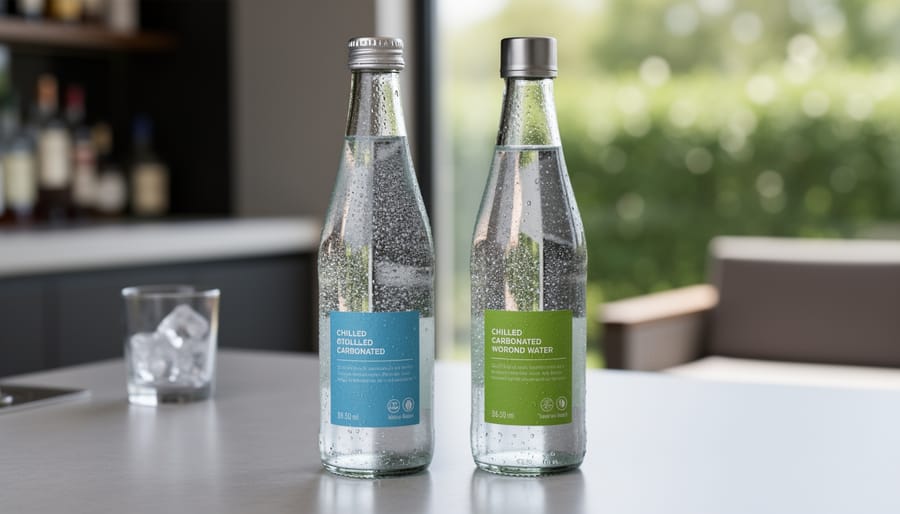
At their core, both club soda and sparkling water are carbonated water, plain water infused with carbon dioxide gas to create those signature bubbles. The confusion between them makes sense because they share this fundamental quality: they both fizz, they both refresh, and they both deliver that satisfying bite on your palate. But they’re not quite identical twins.
Here’s where the distinction matters:
- Sparkling Water
- Natural water with carbonation added through pressurized CO2, containing no additional minerals or salts. It delivers a clean, neutral taste with minimal calorie content.
- Club Soda
- Carbonated water enhanced with added minerals including sodium bicarbonate, potassium sulfate, and occasionally sodium chloride. These additions create a slightly saltier taste and marginally higher calorie count.
- Soda Water
- An interchangeable term for sparkling water, referring to the same carbonated water without added minerals. The two terms describe identical products despite different labels.
The production process for both starts the same way: water plus forced carbonation. Sparkling water stops there, keeping things simple and pure. Club soda takes an extra step, introducing mineral salts that subtly alter the flavor profile. These minerals aren’t random additions, they’re designed to enhance the taste and add a touch of complexity that some brewers and mixologists prefer for specific applications.
Think of sparkling water as the stripped-down version, delivering pure carbonation without interference. Club soda is the seasoned variant, bringing a hint of salinity that can complement certain flavor combinations. For beer enthusiasts experimenting with shandies or beer cocktails, understanding this compositional difference helps you predict how each will interact with your brew’s malt sweetness, hop bitterness, and overall character.
How Carbonation Works in Both Beverages
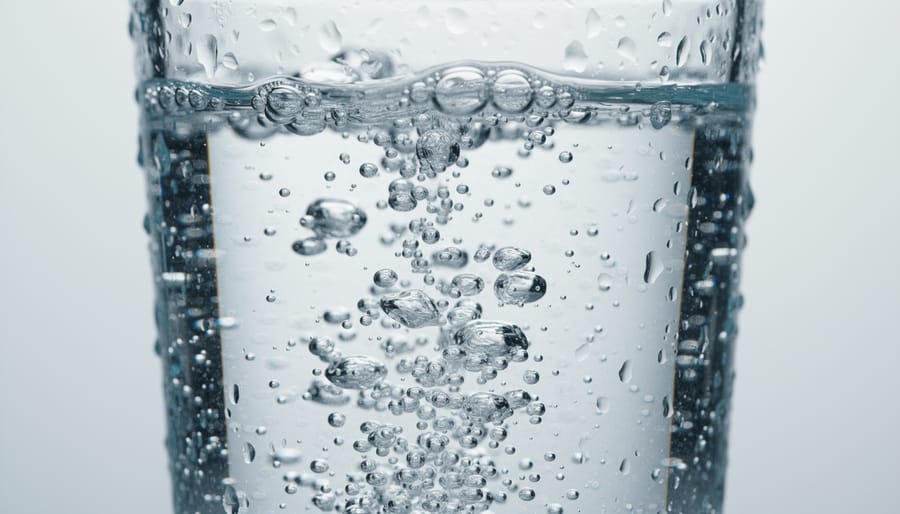
Whether you’re cracking open a bottle of club soda or sparkling water, the fizz you hear and feel comes from the same basic process: dissolving CO2 under pressure into water. The method is nearly identical to how carbonation works in beer brewing, where carbon dioxide gas gets forced into liquid under high pressure.
Here’s what happens at the molecular level: when CO2 gas meets water in a sealed, pressurized environment, the gas molecules dissolve into the liquid and form carbonic acid. The pressure keeps those CO2 molecules locked in solution. Once you open the container and release the pressure, the dissolved gas wants to escape, forming the bubbles that rise to the surface and create that satisfying effervescence on your tongue.
The intensity of carbonation depends on how much CO2 gets dissolved and at what pressure. Commercial producers typically carbonate at pressures between 30 and 50 PSI, similar to what many homebrewers use for kegging beer. The colder the water during carbonation, the more CO2 it can hold, which is why chilled carbonated beverages feel fizzier than warm ones.
For club soda and sparkling water, manufacturers inject the CO2 mechanically. Natural sparkling water from mineral springs contains carbonation that occurred underground through geological processes, but most bottled versions get additional CO2 to ensure consistent fizz levels. The carbonation process itself doesn’t distinguish these beverages, that comes down to what’s in the water before the bubbles arrive.
Types of Carbonated Water: What Sets Each Apart
Sparkling Water: Natural and Simple
Sparkling water is the purest form of carbonated water, just natural water with CO2 added to create those crisp bubbles. Unlike club soda, it contains no added minerals or salts, which gives it a clean, neutral taste that won’t compete with the flavors in your homebrew or beer cocktails. This simplicity makes it a versatile mixer when you want carbonation without altering the character of your beverage. When it comes to sparkling water and calories you’re looking at zero, it’s essentially flavored air in water form, which explains why it’s become central to sparkling water trends among health-conscious brewers and drinkers. The mild flavor profile means it won’t mask the subtle hop notes in a pale ale shandy or overpower the fruity esters in your Belgian wit when you’re building summer refreshers.
Club Soda: Carbonation Plus Minerals
Club soda starts with carbonated water and then gets a mineral boost. The minerals added to club soda typically include sodium bicarbonate (baking soda), potassium sulfate, sodium citrate, and potassium benzoate. Some brands also add a pinch of sodium chloride. These minerals serve a practical purpose beyond nutrition, they give club soda its characteristic slightly salty, mineral-forward taste that sets it apart from plain sparkling water.
For brewers mixing beer cocktails or crafting shandies, this mineral content matters. The sodium bicarbonate adds a subtle alkalinity that can soften acidic flavors, while potassium sulfate brings a faint bitter edge. Sodium citrate rounds out the mouthfeel with a hint of tartness. Together, these salts create a more complex flavor base than you’d get from pure carbonated water, which explains why bartenders often reach for club soda when they want the fizz to contribute its own character rather than just provide bubbles.
Other Carbonated Waters Worth Knowing
Beyond club soda and sparkling water, two other carbonated waters deserve mention. Seltzer is essentially plain carbonated water with no added minerals or sodium, just water and CO2. It’s the purest form of fizzy water and offers a completely neutral flavor, making it popular for homebrewers who want carbonation without any mineral influence on their beer cocktails.
Tonic water stands apart from the rest. While it’s carbonated, it contains quinine (which gives it that distinctive bitter taste) plus sweeteners, making it significantly higher in calories and sugar than any other carbonated water. The quinine and sweetness make tonic water ideal for classic cocktails like gin and tonics, but its assertive flavor profile means it’s rarely interchangeable with club soda or sparkling water in brewing applications.
The Key Ingredient Differences That Matter
The mineral additions in club soda make all the difference. While sparkling water is simply water with carbon dioxide added, nothing more, club soda contains a cocktail of minerals and salts that alter both its flavor profile and nutritional content. This isn’t just a technical distinction on a label; these additives create a subtle but noticeable salty-bitter edge that sparkling water lacks entirely.
Club soda’s typical mineral lineup includes:
- Sodium bicarbonate (baking soda), adds a slight alkalinity and mellows acidity
- Potassium sulfate, contributes a faintly mineral, slightly bitter note
- Sodium citrate, enhances tartness and acts as a preservative
- Potassium benzoate, primarily a preservative with minimal flavor impact
- Sodium chloride (table salt), sometimes included to round out the mineral taste
These compounds aren’t added randomly. Each serves a purpose, whether shaping the mouthfeel, balancing the carbonation’s sharpness, or extending shelf life. The result is a more complex flavor that some describe as slightly briny or savory, qualities that can either complement or clash with what you’re mixing.
Sparkling water skips all of this. Its clean, neutral profile comes from pure carbonated water with no mineral enhancement. That simplicity makes it milder on the palate and lower in sodium, which matters if you’re watching salt intake or want the purest expression of whatever you’re pairing it with.
The calorie difference is minimal but measurable. Club soda’s additives can bump it to around five to ten calories per serving, while plain sparkling water typically registers zero. For brewers crafting beer cocktails or shandy-style drinks, that sodium content in club soda can accentuate malty sweetness or cut through hop bitterness in ways sparkling water won’t. The choice hinges on whether you want that mineral backbone or a completely blank carbonated canvas.
How Brewers and Mixologists Use Each One
In the brewing and cocktail world, club soda and sparkling water serve distinct purposes based on their mineral profiles and flavor characteristics.
Club soda shines in beer cocktails and mixed drinks where its added minerals contribute subtle complexity. When crafting a michelada or radler, club soda’s sodium citrate and potassium sulfate complement the beer’s flavor without disappearing into the background. The slight salinity enhances perception of hops and can round out the finish of lighter lagers and pilsners. Many Colorado breweries use club soda in their shandy-style offerings because it adds body and mouthfeel that pure sparkling water lacks.
Sparkling water works better when you want carbonation without interference. For delicate wheat beers or fruit-forward sours, sparkling water maintains the beer’s original character while adding refreshing fizz. It’s the go-to choice for palate cleansing between beer tastings at festivals or homebrew club meetings, the clean carbonation scrubs your palate without leaving mineral residue that might affect your next sample.
The mineral content matters more than you might think for flavor pairing. Club soda’s sodium bicarbonate can soften the perceived bitterness in IPAs when used in cocktails, while its potassium sulfate accentuates hop character. For malt-forward styles like bocks or Scottish ales, sparkling water preserves the sweet complexity without adding competing flavors.
Behind the bar, experienced mixologists keep both on hand. They reach for club soda when building drinks that need structure and mineral backbone, like a beer spritz with amaro. They choose sparkling water for lighter, fruit-based beer cocktails where the beer’s nuances need to remain front and center.
Common Questions About Club Soda vs. Sparkling Water
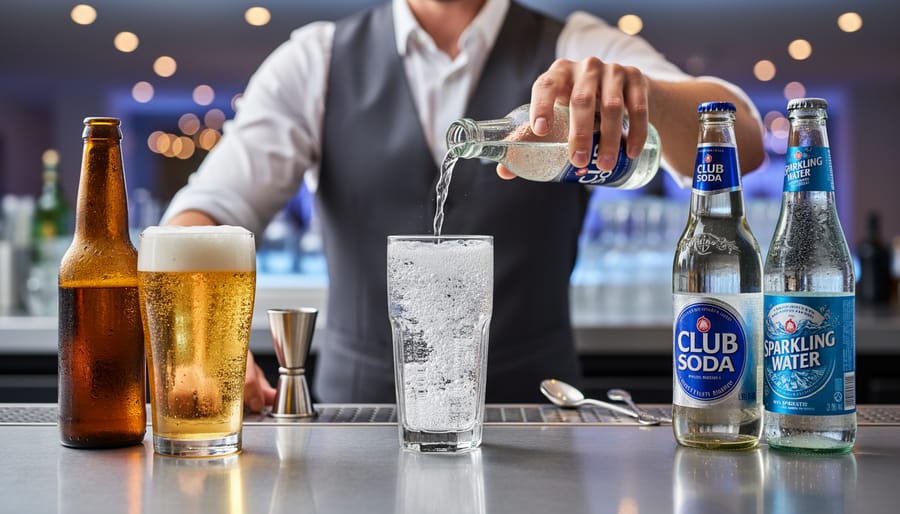
Which is healthier, club soda or sparkling water?
Sparkling water tends to be the slightly healthier choice since it’s just carbonated water with no added minerals or sodium, making it milder and lower in calories than club soda. That said, both are vastly better than sugary sodas, so the health difference between them is minimal for most people.
Can I use club soda and sparkling water interchangeably in recipes?
You can swap them in most recipes, but keep in mind that club soda’s added minerals, sodium bicarbonate, potassium sulfate, and sometimes sodium chloride, give it a slightly saltier, more complex taste that can affect delicate flavor profiles. For beer cocktails or adding flavors to your brews, sparkling water offers a cleaner canvas while club soda brings a bit more depth.
How do club soda and sparkling water taste different?
Sparkling water has a clean, neutral taste with just the carbonation bite, while club soda carries a subtle mineral flavor from its added salts like potassium benzoate and sodium citrate. The difference is subtle but noticeable when you’re tasting side-by-side or working with hop-forward beers where you want the malt and hop character to shine through.
Which works better for beer cocktails and brewing applications?
Sparkling water is your best bet when you want to lighten a beer without altering its flavor profile, think shandies with crisp lagers or radlers with wheat beers. Club soda works well when you want a bit more complexity or need to balance sweeter beer styles, since those minerals can cut through malty richness and add a refreshing edge.
Both beverages have earned their place in the brewer’s toolkit. If you’re running a tasting session, keep both on hand so you can offer your guests a palate cleanser that matches their preference, some folks gravitate toward sparkling water’s simplicity, while others appreciate the subtle bite club soda brings to the table.